
HVAC Maintenance: Top Measures To Cut Costs

Zack Klein • August 19, 2020

Maintaining your facility probably accounts for a large part of your annual budget spending. Did you know that in the U.S., industrial and commercial facilities spend about $400 billion on energy alone? That may seem like a lot of money, but there are ways to lower these costs. The savings you generate would allow for business development, marketing expansion or other expenditures. If you’re looking for a way to cut costs, look no further than HVAC (Heating, Ventilation and Air Conditioning) maintenance.


In an average commercial building, HVAC systems are the largest energy consumers. Oftentimes, there are automated systems and other technologies that work to reduce energy usage. However, maintaining your HVAC system significantly affects the amount of energy this equipment utilizes. Below, we provide you with a checklist that encompasses both indoor and outdoor HVAC components. Your facility manager and maintenance department can keep your HVAC systems running more effectively through consistent top measures for hvac maintenance.
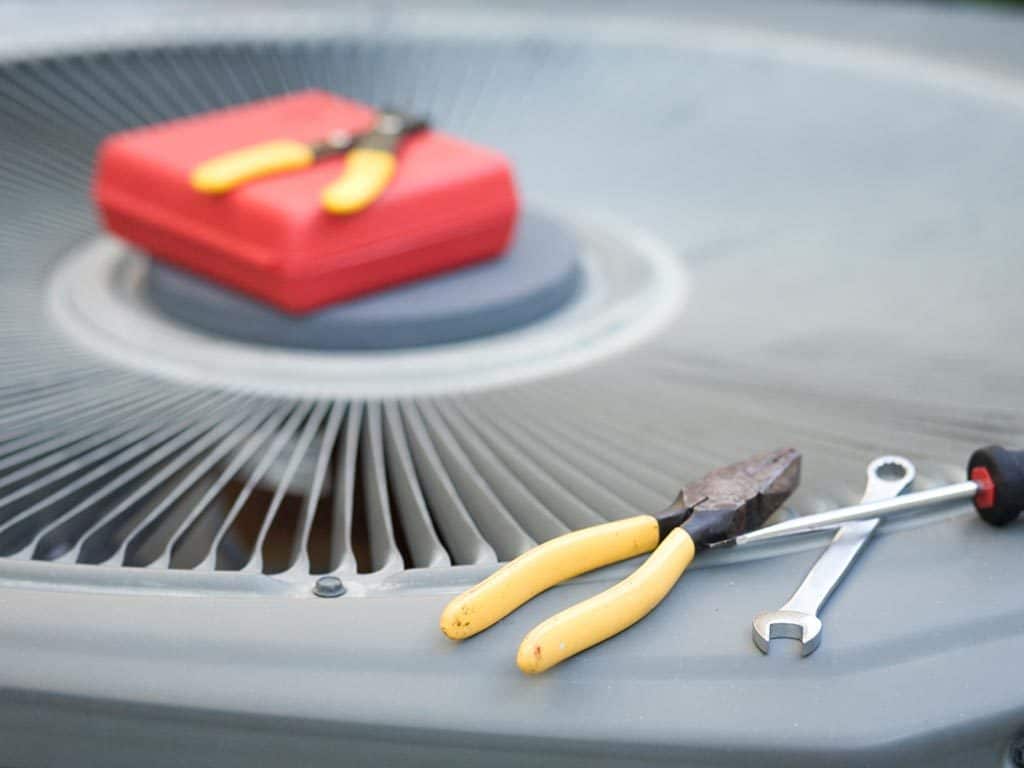
COMMERCIAL HVAC PREVENTATIVE MAINTENANCE

You should have your maintenance team perform these assessments in the Spring for cooling systems and in the Fall for heating systems. These checks should be completed by a qualified, commercial HVAC technician. The checklist of preventative measures is designed to help your entire HVAC system run more proficiently throughout the changing seasons. Review this list of top measures for hvac maintenance.


FOR INDOOR COMPONENTS:

  • Blower assembly is checked and cleaned.
  • Belts are lubricated or replaced.
  • Combustion blower housing is cleaned.
  • Evaporator coil, drip pan, and condensate lines are correctly cleaned and cleared.
  • Burner assembly is inspected and cleaned.
  • Ignition system is cleaned.
  • Safety controls are tested.
  • Heat exchanger is inspected.
  • Flue system is checked for dislocations and wear.
  • Control box, wiring, and connections are checked and tightened.
  • Air filter is replaced or cleaned.
  • Duct system is checked.


FOR OUTDOOR COMPONENTS:

  • Coil and cabinet are inspected and cleaned.
  • Drain pans and condensate lines are cleared of obstructions.
  • Compressor is inspected.
  • Fan motor and blades are inspected and lubricated.
  • Control box, switches, wiring and safety controls are inspected.
  • Refrigerant level is measured and recharged if necessary.


HVAC MAINTENANCE MEASURES: INSPECT AND CHANGE AIR FILTERS

Moreover, every 3-4 weeks, your facility manager or maintenance staff need to examine your air filters to ensure the filter has not been clogged. Similarly, the air filters should be changed approximately every 3-6 months in accordance with the manufacturer’s instructions.


It is imperative that your maintenance crew regularly checks air filters and changes them as suggested. Restricted or clogged airflow through your HVAC system deters performance. Therefore, it also increases energy consumption. When the system is being used more frequently, you may need to replace the filters more often. Studies have indicated that running your system with clean air filters reduces energy usage by upwards of 15%.


HVAC MAINTENANCE MEASURES: PROGRAM THOSE THERMOSTATS

In addition to checking and changing air filters, you should also program your facility’s thermostats. You should adjust them at the beginning of both heating and cooling season. This is also when temperatures get to the point of not using the systems regularly.


At the time when you will switch from the heating system to cooling system, or when you won’t be running it as much, your facility manager or maintenance department need to check the thermostat programming to make sure settings are optimized for energy savings. You can do this by manually programming your thermostats or through your building’s automation systems. Once you have done this when the seasons change, it is still vital to recheck to ensure the settings still fit your current needs.


HVAC MAINTENANCE MEASURES: SYSTEM CHECKS

We also suggest that you perform periodic system checks on a monthly basis, or generally as needed. Some smaller facilities may not be need to do checks as often as larger ones. First, you should evaluate thermostat operation. If they are not functioning correctly, your HVAC systems will run more frequently than needed. In turn, this will boost your energy consumption. If you discover that your thermostats are not working correctly, you should have them fixed or replaced.


Additionally, remember to check drip pan and drain lines recurrently. Clogs in your HVAC systems’ drainage lines can cause moisture to back up into your building. Ultimately, this can cause mold and mildew growth, as well as potential other damages. Have your maintenance staff correctly empty the drip pan and drain lines and remove any obstructions that have developed over time.


OUR TEAM CAN ASSIST YOU

After almost 46 years, we are your restoration services expert. Not only are we there for fire and water damage, but our team of certified professionals can handle any HVAC maintenance issues. GRS has served the Gulf Coast’s residential, commercial and industrial indoor air quality needs since 1974. We are NADCA certified and comply with the NADCA code of ethics.


At Guarantee Restoration Services, we understand that preventative measures only take you so far if you have not addressed issues or performed regular maintenance over time. Even in businesses or homes where the air filter is changed regularly, dust and particles can gather in the system and ducts, which results in decreased air quality and system performance.


We are here to help you. For more information about our air duct cleaning services, give us a call at 1-800-349-HELP (4357) or email info@guaranteerestoration.net. Our team is available 24/7, which isn’t just a number, it’s a GUARANTEE.
CONTACT US
By Adrianne Hungerford June 3, 2026
Hidden moisture can damage commercial buildings long before it's visible. Learn the risks, warning signs, and importance of professional mitigation.
By Jeremy Cryer May 27, 2026
On the Gulf Coast, preparation isn’t optional. It’s simply a part of doing business. From hurricane season to heavy rain events and everything in between, properties in Lafayette face a different level of risk than most. And when something does happen, the difference between a smooth recovery and a stressful situation often comes down to one thing: having a plan in place with the right team. Why Pre-Loss Planning Looks Different in Lafayette Pre-loss planning looks a little different here because the risks are different. It’s not just about knowing where your shutoffs are or having a list of contacts. It’s about understanding how quickly a storm can shift, how water can move through a property, and how to respond when multiple buildings or locations are impacted at once. That kind of preparation requires more than a template. It requires local knowledge. At Guarantee Restoration Services, our Lafayette team builds pre-loss plans with that in mind. We take into account the specific challenges that come with properties in Acadiana, including wind-driven rain, tornado threats, and the potential for widespread damage across an entire area. That allows us to create a plan that is realistic, not just theoretical. The Importance of Having a Clear Path Forward “We’ve seen how quickly things can escalate during a storm event. Having a pre-loss plan in place gives our clients a clear path forward instead of trying to figure it out in the middle of the chaos,” said Craig Rose, Mitigation Manager at our Lafayette Branch. That “clear path forward” is what makes the biggest difference. When a storm hits, response times are everything, but so is access. Roads can be blocked, power can be out, and communication can be limited. A strong pre-loss plan accounts for those variables and ensures that response efforts can begin as soon as it is safe to do so. Protecting Operations, Employees, and Tenants It also helps property teams stay focused on what matters most. Instead of trying to coordinate vendors, track down information, or make high-pressure decisions, they can follow a plan that has already been built around their property and their priorities. From a business standpoint, that level of preparation protects more than just the building. It protects operations, tenants, employees, and timelines. Building Trust Before Disaster Strikes “Pre-loss planning is about building trust before there’s ever a problem. Our clients know who to call, what to expect, and how we’re going to support them when something happens,” said Paige Hebert, Business Development Representative in Lafayette. That trust and familiarity matter, especially in a region where large-scale events can impact entire communities at once. You are not just calling a company, you are calling a team that already understands your property, your risks, and your expectations. Be Realistic. Be Ready. Pre-loss planning on the Gulf Coast is not about over-preparing. It is about being realistic and ready. Because when the next storm comes through Lafayette, it is not a matter of if you will need a plan—it is a matter of how well that plan works when it is put to the test. Call us today to schedule your Pre-Loss Planning meeting where 24/7 is not just a number… it’s a GUARANTEE!
By Shawn Folks May 20, 2026
When a disaster strikes and a loss happens, the clock starts immediately. The first 24 hours after a storm event or a fire loss are the most critical for any property. It is at this time that major decisions need to be made, the damage is either controlled or spreads, and the path to recovery is determined. These decisions are often rushed, unclear, and reactive without a plan in place. This is where having a pre-loss plan makes a measurable and meaningful difference. A pre-loss plan creates a clear starting point for you and your team instead of scrambling to figure out who to call, what steps to take, or how to protect the property. It removes reactive hesitation and replaces it with action to recover. Everyone involved knows their role and understands the process, allowing them to move quickly without second guessing. Speed matters in restoration. Water continues to spread; materials continue to deteriorate, and secondary damage, like mold, can begin in as little as 24 to 48 hours. The faster a response is initiated, the more damage can be contained. Pre-loss planning allows that response to begin immediately, not hours or days later. Other than fast action, it also brings clarity during a very chaotic and challenging moment. Property managers, facility teams, and business owners are not left out in the dark trying to make high-pressure decisions on the spot. Instead, they are following a plan that has already been thoroughly thought through, discussed, and tailored to their specific property’s needs. Communication can become fragmented without a plan. Another advantage to pre-loss planning is coordination. There are several moving parts including emergency services, restoration teams, and insurance carriers. Having a plan streamlines communication ensuring that everyone involved is aligned from the start. At Guarantee Restoration Services, pre-loss planning is designed to support the exact moment the dust settles. It’s not just about preparing documents to sign ahead of time; it’s about setting up our partners and clients to respond with confidence when it matters the most. From established points of contact to documented site conditions and response protocols, everything is built to protect time, reduce damage, and maintain control.  Many people think preparation is about preventing the worst from happening. Rather, it is about being ready when it happens. Because when those first 24 hours hit, you do not want to be figuring things out. You want to be executing a well-formulated, personalized plan for recovery. Call us today...where 24/7 isn’t just a number, it’s a GUARANTEE!
VIEW ALL BLOGS