Hidden Mold Risks in Commercial Buildings After Water Damage
Mold does not always appear immediately after water damage, especially in commercial buildings where wall systems, HVAC infrastructure, and shared spaces allow moisture to travel beyond the original source. Because mold thrives in damp environments, even small amounts of lingering moisture can lead to larger issues over time.
At Guarantee Restoration Services, we frequently see mold problems that began with what initially appeared to be a minor water issue. Understanding how and where mold can form helps property owners take proactive steps to protect both their buildings and indoor air quality.
Why Mold Is Often Missed in Commercial Buildings After Water Damage
After a water-related incident, visible surfaces may appear dry within a short period of time. However, moisture can remain trapped inside wall cavities, beneath flooring, within insulation, or inside HVAC systems. When these areas are not properly dried and inspected, mold can begin growing without obvious warning signs.
Because mold thrives in damp, low-visibility spaces, many property owners assume the problem has been resolved once visible water is gone. In our experience, this is one of the most common reasons mold issues worsen over time. Without professional inspection and moisture verification, mold can continue spreading unnoticed, leading to more extensive remediation and repair needs later.
How Hidden Mold Develops Inside Commercial Wall Systems
Hidden mold can cause progressive damage to building materials over time. As mold feeds on organic materials, it can weaken drywall, wood framing, and subflooring. Insulation affected by moisture may also lose effectiveness, contributing to energy loss and higher utility costs.
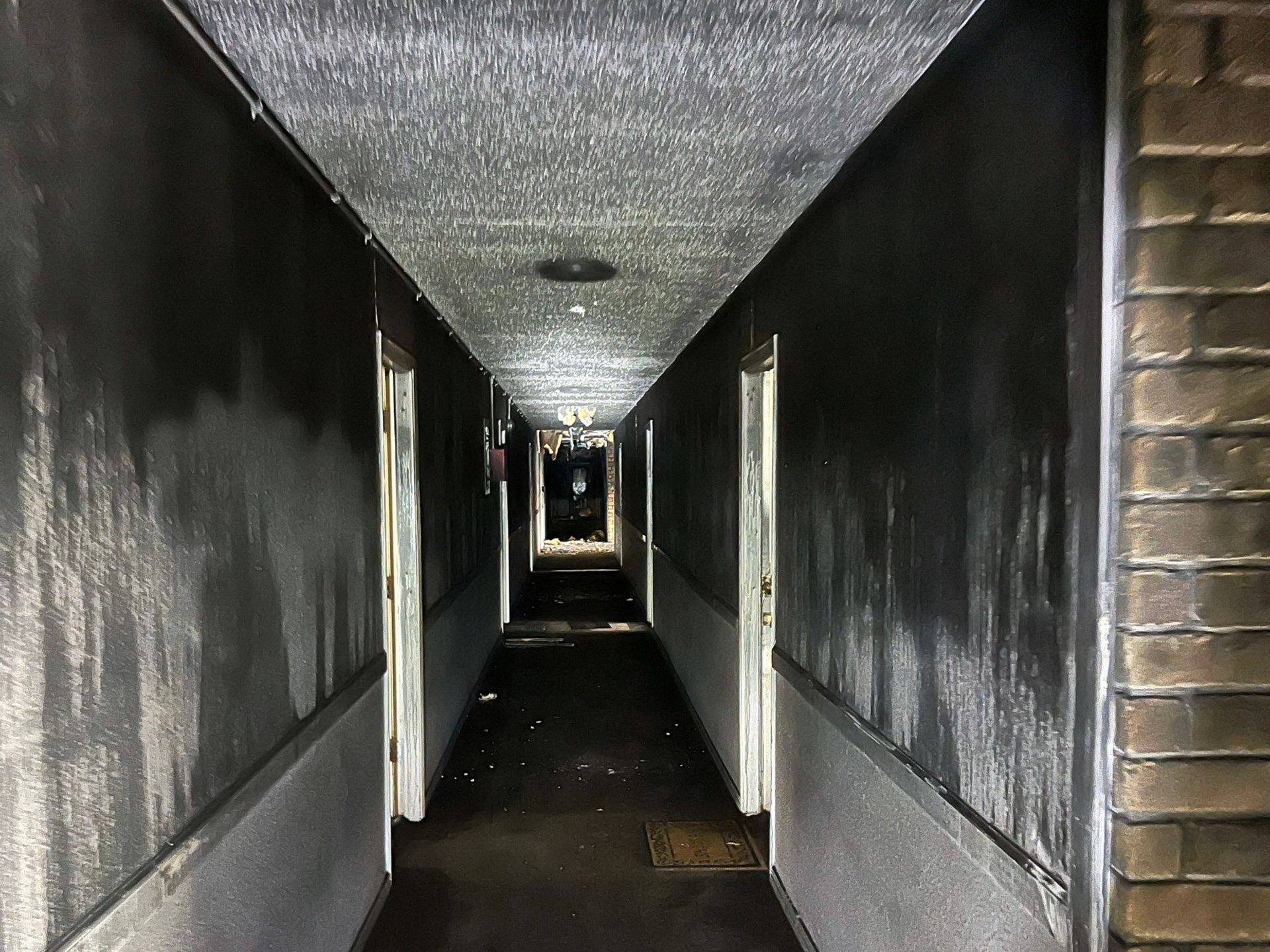
We often encounter situations where mold has moved well beyond the original water-damaged area. When this happens, reconstruction becomes more complex and disruptive. Early identification allows us to contain the issue more effectively and limit the overall scope of repairs.
Indoor Air Quality Risks Caused by Hidden Mold in Business Properties
Mold growth can impact indoor air quality even when it is not visible. Airborne spores may circulate throughout a building, potentially affecting occupants over extended periods. Persistent odors, allergy symptoms, or respiratory irritation are often early indicators of a hidden mold issue.
Because indoor air quality concerns are not always immediately linked to water damage, mold problems can go undiagnosed for long periods. Addressing hidden mold is an important part of restoring a safe, healthy indoor environment, particularly in properties with ongoing moisture issues.
How to Prevent Mold Growth After Water Damage
Thorough inspections and professional drying are key to preventing hidden mold growth. Moisture detection tools allow our team to identify damp areas that are not visible to the naked eye, while controlled drying ensures materials reach safe moisture levels before repairs are completed.
For our team, prevention is always part of the process. By identifying moisture early and confirming that affected areas are properly dried, we help reduce the likelihood of mold becoming established and prevent repeat issues after restoration is complete.
How Guarantee Restoration Services Identifies and Remediates Hidden Mold in Commercial Properties
At GRS, we focus on identifying and addressing moisture issues that can lead to mold growth throughout commercial buildings, not just in areas where damage is immediately visible. Our process includes detailed inspections, moisture mapping, containment to prevent cross-contamination, and air filtration to control airborne spores and protect indoor air quality.
Because mold remediation and reconstruction often go hand in hand in business properties, our team is equipped to manage the full restoration process from start to finish. By coordinating inspection, remediation, and rebuilding under one approach, we help commercial property owners, facility managers, and business operators reduce long-term risk, limit downtime, and restore their spaces with confidence.